
How to Check Criminal History in Gaylord
A useful Gaylord criminal record check begins by naming the Gaylord event, not by searching every system at once. A Gaylord police narrative, a jail intake entry, and a court judgment have different custodians. The official City of Gaylord gateway is the starting point when Gaylord Police created the incident. Gaylord has not published a confirmed public name-search portal, dedicated current records form, direct records email, counter hours, or fee schedule in the reviewed official material.
- Confirm whether Gaylord Police, the Otsego County Sheriff, or the Michigan State Police responded.
- Ask the creating agency for the incident report and identify the date, place, parties, and incident number if known.
- Check the county roster when an arrest led to lodging at the Otsego County Jail.
- Use 87-A District Court for misdemeanors, arraignments, bond, and felony preliminary events, then 46th Circuit Court after felony bind-over.
- Use ICHAT only when broader public Michigan repository history is needed.
This Gaylord order keeps unlike records from being mistaken for one another. It also gives the custodian enough detail to find a Gaylord record without assuming that every Gaylord arrest became a charge or conviction.
Gaylord Police or Sheriff Records
The badge on the Gaylord report controls the first request. Gaylord Police records belong with Gaylord even though the county jail may later book the same person. Otsego Sheriff records go to its Records Division at 124 S. Court Avenue, and MSP Gaylord material follows the state police records or FOIA route. A Gaylord request sent to the wrong office can produce a referral rather than the document.
| Gaylord event | First official route | Record expected |
|---|---|---|
| City police response | Gaylord Police through the city site | Incident or arrest report |
| Sheriff response or county lodging | Otsego Sheriff Records or jail | Agency report or booking entry |
| MSP Gaylord response | Michigan State Police | State police incident material |
The Gaylord comparison matters most when several agencies worked at one scene. The county roster can name an arresting agency, but it does not transfer ownership of that agency's report to the jail.
The Gaylord Police Department
Gaylord Police creates city incident and arrest reports. Those reports may describe officer observations, the alleged conduct, location, witnesses, property, and enforcement action. They are not court judgments. Active investigations, juvenile information, victim details, protected addresses, and other exempt material may be withheld or redacted under Michigan law.
The Gaylord source gives the proper gateway, but the reviewed official results did not expose a dedicated police records desk, a current form-field inventory, a published online blotter, or an official mobile app. A requester should use the Police or City Clerk FOIA route found through the Gaylord site and ask Gaylord what identifiers and delivery method it requires. No Sheriff fee should be assigned to a Gaylord Police request because the two agencies have different custodians and no Gaylord fee was confirmed.
The U.S. Census Bureau's Gaylord profile supplies official context for the city rather than a county-wide estimate.
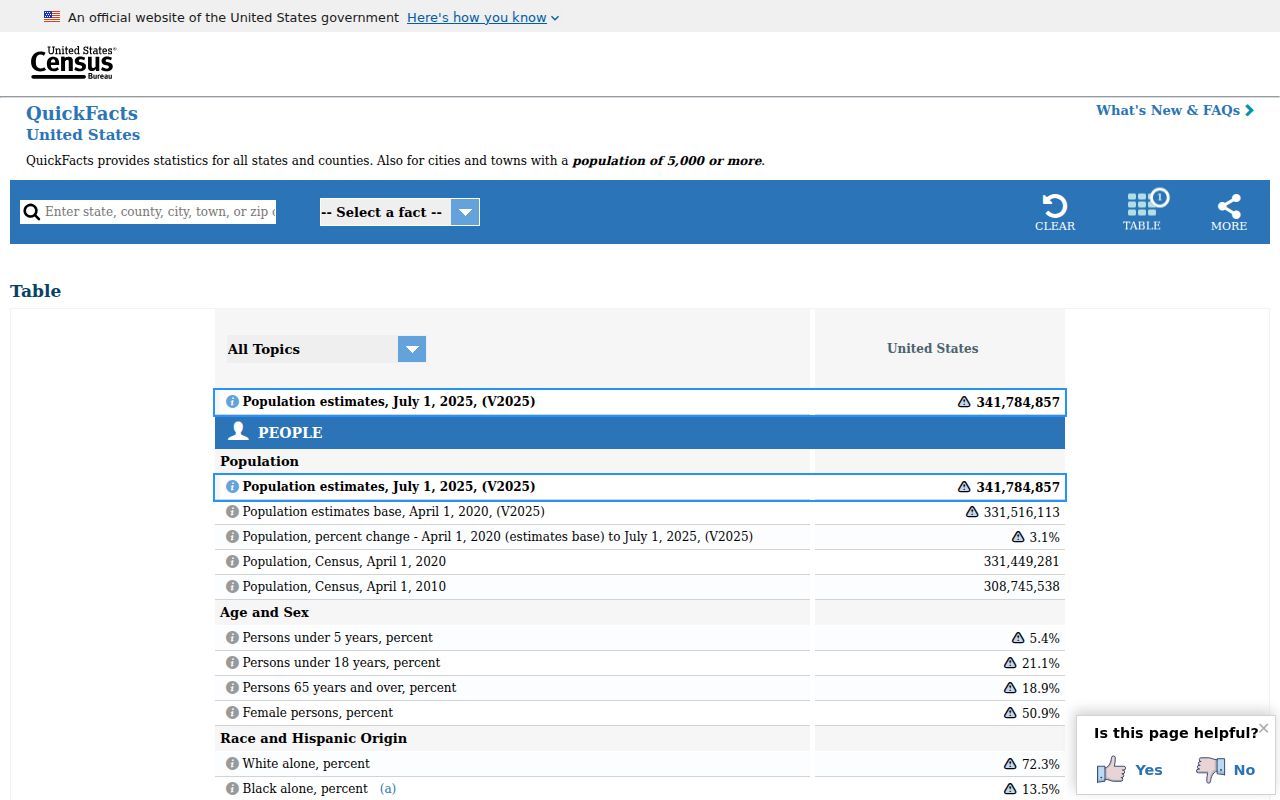
The profile helps keep Gaylord records discussion at city scale, where agency boundaries matter more than broad county totals.
Gaylord Criminal Records at the Crossroads
Gaylord is the county seat and sits at the I-75 and M-32 crossroads. That setting helps explain why a local event may involve city police, a county deputy, or MSP Gaylord. It does not mean that every incident becomes a Gaylord Police record. The correct agency name remains the key fact for a report request.
Official Gaylord crime figures should also follow the reporting agency. A county total cannot be assigned to Gaylord, and a booking count cannot stand in for crime. Michigan Incident Crime Reporting and the FBI Crime Data Explorer permit agency and year filters, but the research did not produce a supported Gaylord offense count for publication. Readers should select Gaylord Police Department and a defined year before drawing any Gaylord-level conclusion.
The Michigan Incident Crime Reporting program explains the state's official reporting layer.
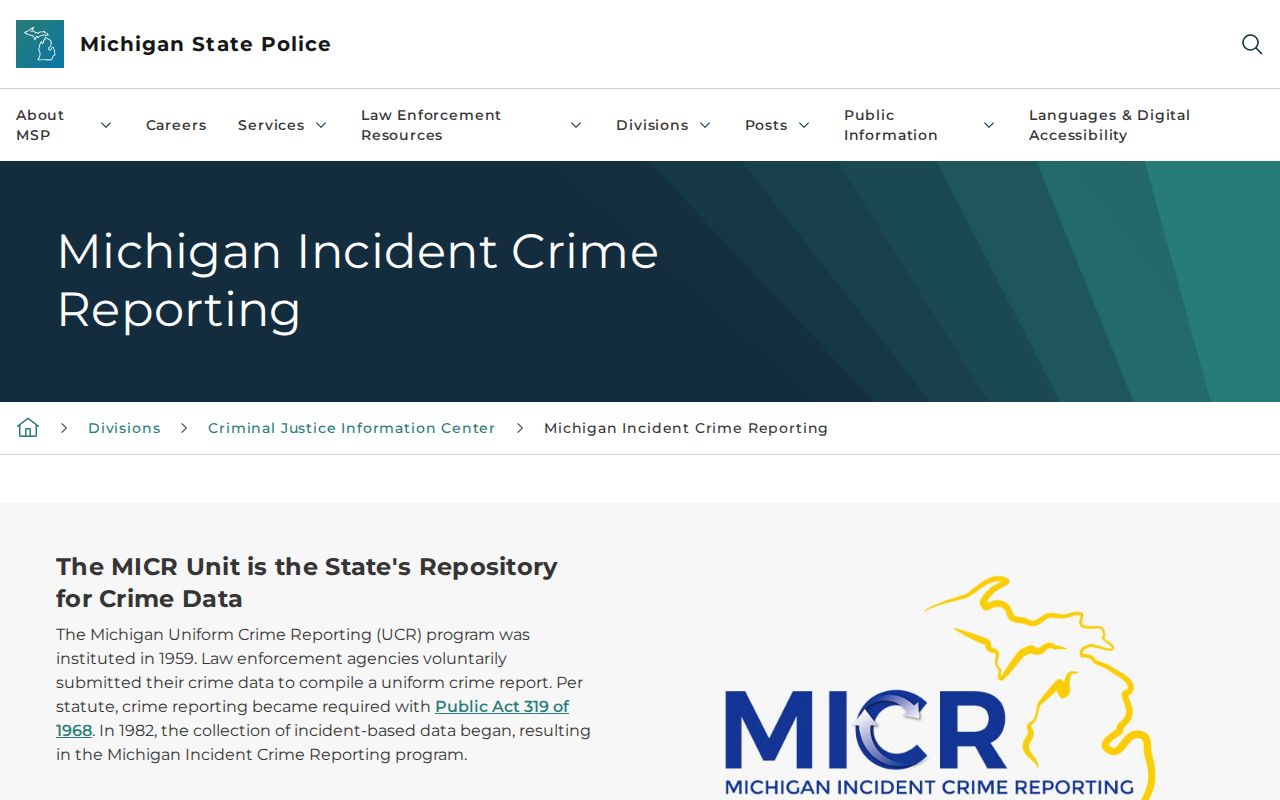
This reporting source adds Gaylord trend context, while the police report and court file remain the sources for one named Gaylord event.
Arrests and Bookings in Gaylord
Gaylord does not operate a separate city jail identified in the official sources. When a city arrest leads to lodging, the Otsego County Jail at 124 S. Court Avenue creates the booking record. The county publishes dated PDF rosters and “Bookings With Charges” reports instead of a live name-search database. Each report is a snapshot with a printed cutoff.
A booking report may show booking number, date and time, release time when applicable, arresting agency, broad descriptors, housing class, charge code, and status. The inspected county report did not show mugshots, bond, warrant number, magistrate, or next court date. “Active” describes the row in that report. It does not prove a conviction or current custody.
The county's official inmate information page describes how local custody operates.
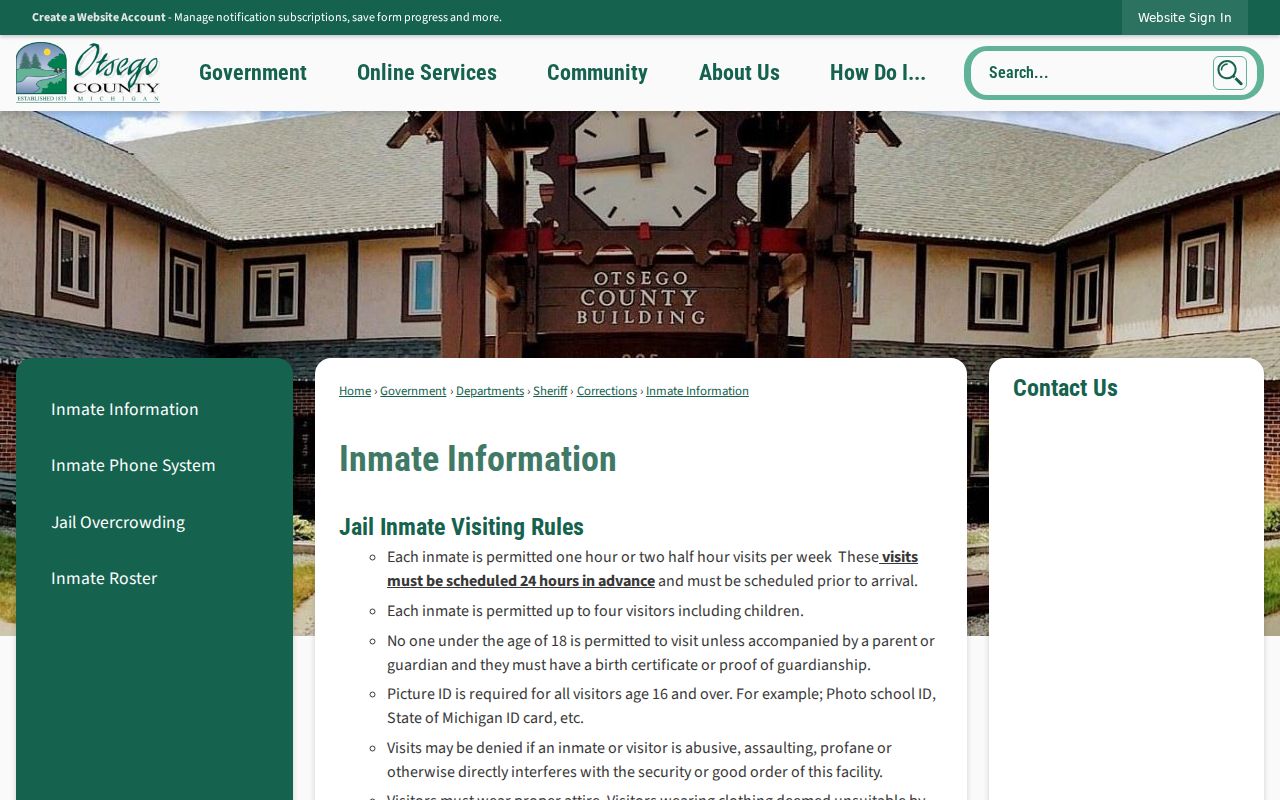
The jail material shows where Gaylord booking questions go after a city arrest leaves police custody.
When Gaylord Booking Records Lag
A person arrested in Gaylord may not appear if the newest county PDF predates the Gaylord booking. The reverse can also occur: a historical report may remain online after release. First read the report title, booking window, and printed date. Then call the jail at 989-732-3555 when current status matters. Browser text search is only a PDF viewer tool, not a county database field.
Next, check 87-A District Court for the Gaylord arraignment and bond. A very new arrest can reach the jail before the court index is updated. If no booking appears, confirm whether the person was cited and released, taken elsewhere, or never lodged. Do not infer a result from silence in one file.
Note: A dated Gaylord booking entry proves jail processing at that time, not guilt, present custody, or the final filed charge.
Gaylord Municipal Court Records
Gaylord has no separate municipal criminal court in the official Otsego judicial inventory. The correct Gaylord route is the 87-A District Court at the Alpine Center in Gaylord. It handles misdemeanors punishable by less than one year, arraignments, bail, arrest and search warrants, and preliminary felony stages. A Gaylord felony bound over for trial moves to the 46th Circuit Court and County Clerk downtown.
| Court Name | 87-A District Court, with 46th Circuit Court after felony bind-over |
|---|---|
| Case Types Heard | Misdemeanors, arraignments, bond matters, warrants, and felony preliminary proceedings |
| Case Lookup Channel | MiCOURT Case Search when available, or the correct clerk counter |
| What the Docket Shows | Case number, filed counts, events, hearings, disposition, sentence, and public financial entries |
| Copies & Fees | Ask the proper clerk; no official Otsego copy or certification fee was located |
Calling the local Gaylord case “Gaylord municipal court” can hide the correct search result. Choose 87-A or 46th Circuit in MiCOURT and read each Gaylord count through its final disposition.
Three Gaylord Criminal Record Buildings
One Gaylord case can touch three Gaylord addresses. The Sheriff and jail are at 124 S. Court Avenue. The 87-A District Court sits at 800 Livingston Boulevard, Suite 1-C. The County Clerk and 46th Circuit felony files are at 225 W. Main Street. These Gaylord sites do not hold the same documents.
- Court Avenue
- Police and Sheriff records when that agency created them, plus county booking and jail history.
- Alpine Center
- District arraignment, bond, misdemeanor, warrant, and preliminary felony court records.
- Downtown County Building
- Bound-over felony filings, judgments, and certified Circuit Court material held by the County Clerk.
The Gaylord courts share a concurrent-jurisdiction administrative plan. That shared management does not merge their counters or erase statutory jurisdiction. A records visit should be aimed at the office holding the actual document.
Where Gaylord Records End Up
The life of a Gaylord record changes after the first report. Gaylord Police keeps the city incident material. The jail creates a booking record when the person is lodged. District Court records the first hearings and any misdemeanor case. A bound-over felony reaches Circuit Court, and the final disposition is reported to the Michigan State Police Criminal Justice Information Center when it belongs in the state repository.
Record flow: Gaylord Police › Otsego County Jail › 87-A District Court › 46th Circuit Court › Michigan State Police CJIC
ICHAT shows only the public subset of reportable Michigan history. It excludes warrants, traffic matters, local misdemeanors, juvenile and suppressed records, federal and tribal matters, and other states. The local file is therefore still needed to see pleadings, hearings, amended counts, and the judgment. Broader county channels are summarized on the Otsego County criminal history overview.
MiCOURT Gaylord Case Records
MiCOURT requires a court choice before a useful Gaylord name search. Select the participating 87-A District Court for a misdemeanor or preliminary felony matter. Select the 46th Circuit Court for a felony after bind-over. Search by case number when known; otherwise use party name and any permissible narrowing field the selected court provides.
| Search item | Best use | Gaylord caution |
|---|---|---|
| Court | Separates District from Circuit | There is no separate city court option |
| Case number | Targets one docket | Use the local format exactly |
| Party name | Finds possible matches | Confirm identity and case facts |
| Register of actions | Shows the event trail | Read every count and final outcome |
A Gaylord portal entry may not include a downloadable image of every filing. For an older file, certified copy, or restricted-record question, contact the clerk at 989-731-0201 for District Court or 989-731-7500 for Circuit Court.
Gaylord Police FOIA Records
Michigan FOIA applies to releasable city police records, while court files are accessed through the clerk under Michigan Court Rule 8.119. That difference is easy to miss. A police FOIA request should describe the date, location, people involved, incident number if known, and the exact report or media sought. The city may redact exempt details or charge lawful search, review, and copy costs.
The county FOIA form is useful only for records held by county government. The Otsego County FOIA route illustrates that separate county channel.

The image reinforces the custodian rule: city-created police material stays with Gaylord, while county-created records use the county route.
Public Access Rules
Public access does not make every part of a Gaylord criminal record open. Police may withhold active-investigation material and redact protected personal details. Courts can maintain public and nonpublic material within the same file. Juvenile matters, victim identifiers, sealed records, and convictions set aside under Michigan law are not ordinary public search material.
Key Statutes:
Michigan FOIA, MCL 15.231 states the public-access policy for public-body records, subject to exemptions.
MCL 28.243 governs reporting and handling of criminal-history information in the state system.
Michigan Court Rule 8.119 controls access to court records and nonpublic case material.
Ask the office that created the record, then verify a name match through the final court disposition. A Gaylord arrest is not proof of guilt, and a blank state result does not prove that no city report exists.